


Absolute Journal
Blinds for Bi-Fold Doors: What Are Your Options?
Bi-fold doors are a popular feature in contemporary homes because they allow large areas of glazing to connect indoor and outdoor spaces while bringing plenty of daylight into the room. Yet the same expanse of glass that makes bi-fold doors appealing can create practical issues. Strong sunlight, glare, overlooking, and changes in indoor temperature can all become more noticeable, which makes choosing the right window covering an important part of planning the room.
Finding blinds for bi-fold doors is slightly different from choosing blinds for an ordinary window. The doors need to fold and open freely, handles and hinges have to remain accessible, and bulky fittings can interfere with how individual panels stack. We therefore consider the doors themselves, how frequently they're opened, their orientation, and what the homeowner wants the blinds to achieve before recommending a particular system.
From our experience, the best bi-fold door blinds are those that feel as though they belong to the doors rather than obstructing them. There are several ways to achieve this, ranging from blinds fitted directly to individual glazed panels to systems installed above the complete opening. Below, we explain the main choices and the practical differences worth considering before deciding.
What Should You Look for in Blinds for Bi-Fold Doors?
Bi-fold doors place several demands on a blind. A conventional blind mounted in front of the entire opening may need to be fully raised before the doors can fold, whereas a blind attached individually to each panel can usually move with the door. Neither approach is automatically better; the right solution depends on how you use your doors.
Light is another important consideration. Large areas of glazing can expose a room to intense direct sunlight, particularly when the doors face south or west. A suitable blind can soften that light, provide privacy and help protect flooring, furniture and other furnishings from prolonged exposure to the sun. If overheating is an issue, the fabric and colour can matter as much as the style of blind itself.
Measurements need particular attention too. Handles, frame depths, seals and the clearance between folded panels can affect which systems will fit. This is one reason we generally favour properly measured solutions for bi-fold doors rather than treating them like an ordinary set of windows. Our wider range of made-to-measure blinds provides a useful starting point when comparing the available styles.
The Best Types of Blinds for Bi-Fold Doors
Perfect Fit and Frame-Fitted Blinds
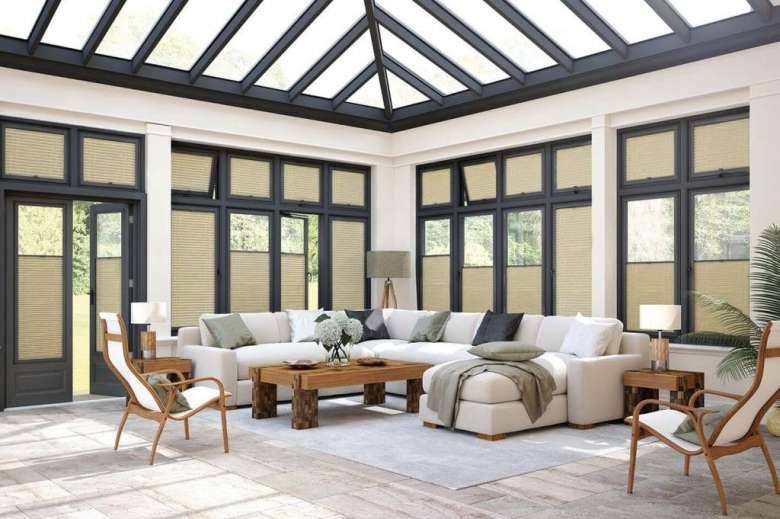
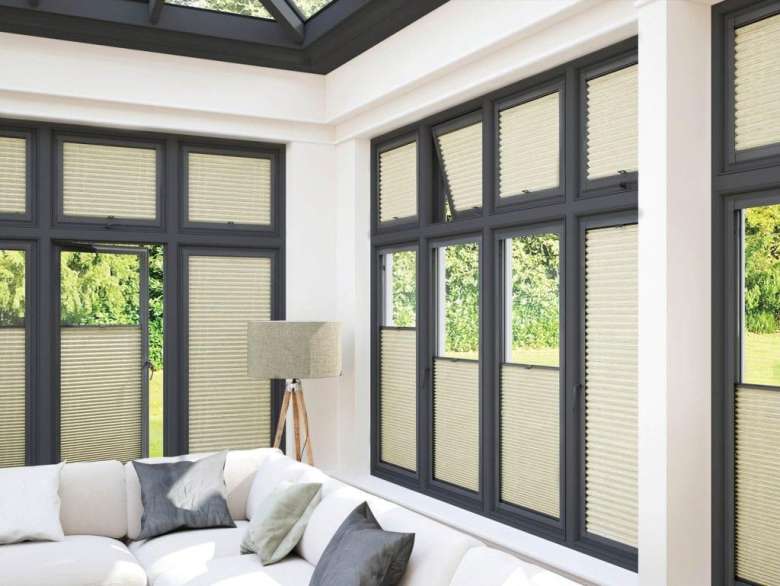
Frame-fitted blinds are often one of the most practical solutions for compatible bi-fold doors. Rather than placing one large blind across the complete doorway, a separate blind is fitted closely to the glazing of each door panel. The result is compact and allows the window covering to travel with the door when it opens.
We've found this approach particularly useful in rooms where bi-fold doors are opened regularly. Because each blind remains close to its pane, there's less loose material around the doorway and homeowners can adjust individual panels according to where the sun is coming from. You might, for example, shade one or two panes while leaving the rest open to retain the view.
Compatibility does need to be checked before choosing this type of system. The construction of the door, glazing beads, handles and available clearances all matter. A careful survey can establish whether a frame-mounted option will allow the doors to fold correctly without the blinds or operating mechanisms coming into contact with adjacent panels.
Roller Blinds
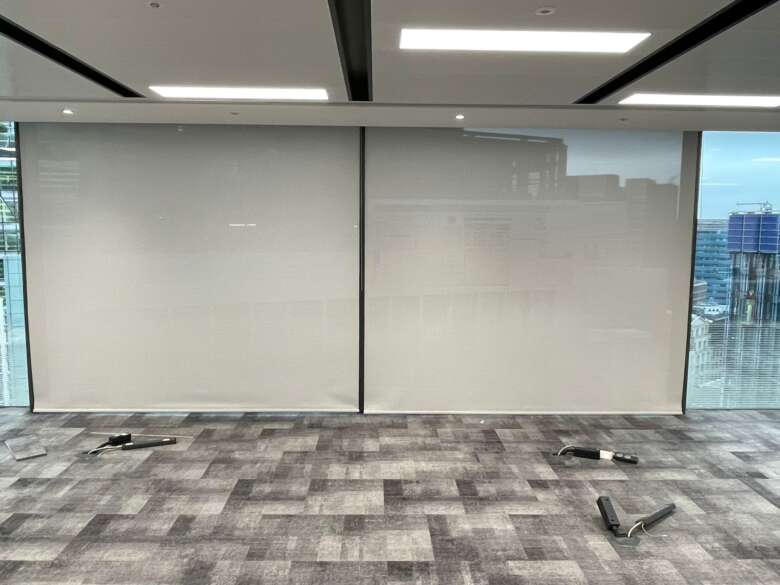
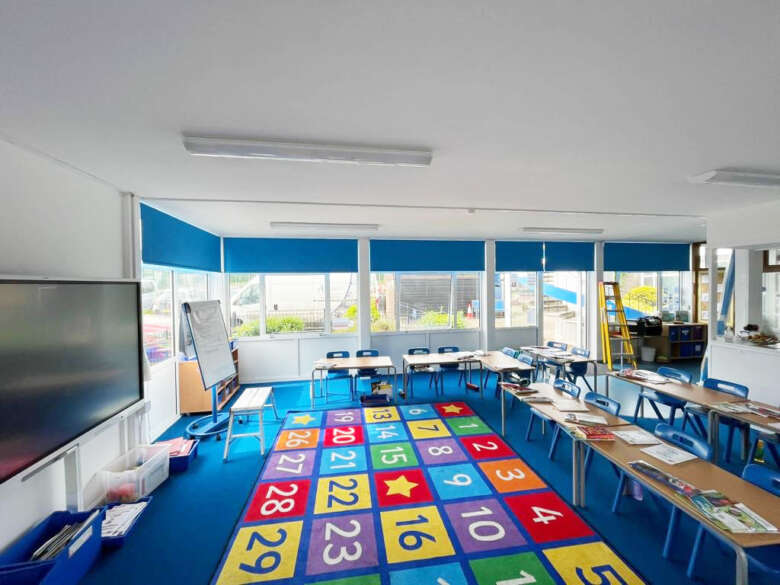
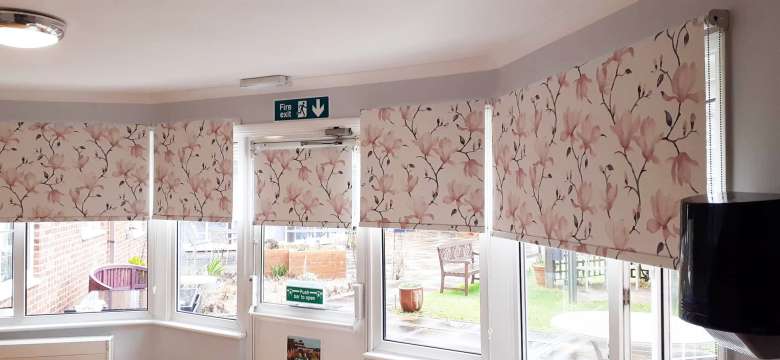
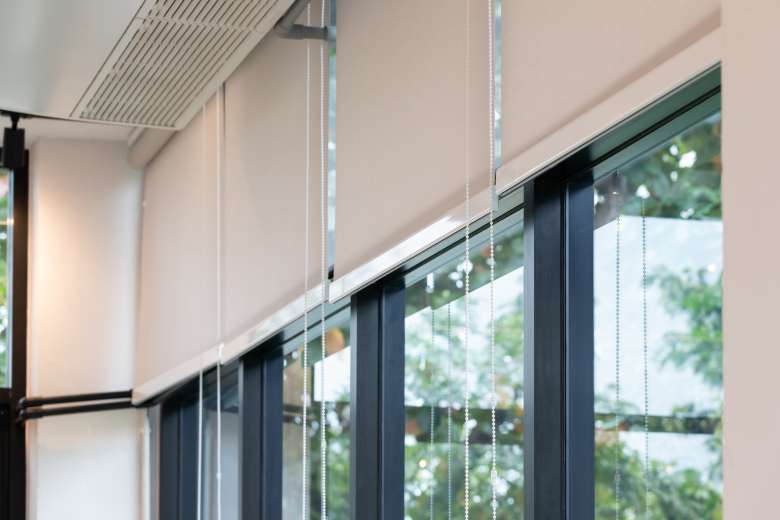
Roller blinds are another strong choice for bi-fold doors because their design is simple and relatively compact. Depending on the doorway, they can be installed as individual blinds corresponding with each section or positioned above the opening as part of a wider arrangement. When raised, the fabric wraps around the head tube and leaves the glazing largely unobstructed.
Fabric selection gives roller blinds considerable flexibility. A light-filtering material can soften harsh daylight while retaining a bright interior, whereas blackout material provides much greater room darkening and privacy. Solar-control fabrics can be useful where glare and strong sunshine are recurring problems.
Our roller blinds are worth considering where clean lines and straightforward operation are priorities. In our experience, getting the dimensions right is especially important across a run of doors: consistent positioning and spacing help several individual blinds look like one considered installation.
Pleated and Cellular Blinds
Pleated blinds have a slim profile that can work particularly well with glazed doors. Their folded fabric compresses neatly, helping preserve the clean appearance of bi-fold glazing when the blinds are open. They can provide varying degrees of privacy and light filtering according to the fabric selected.
Cellular, or honeycomb, constructions add another useful characteristic. Their fabric contains pockets that hold a layer of air, which can help limit heat transfer through the covered window. This can be valuable around substantial areas of glass, particularly where maintaining comfortable room temperatures is a concern.
It's important to keep expectations realistic: blinds are an addition to efficient glazing and proper building insulation rather than a replacement for either. The Energy Saving Trust advises that curtains and blinds can help reduce heat loss through windows, particularly when they're closed appropriately. For a large glazed opening, that additional layer can form one useful part of a broader approach to household energy efficiency.
Venetian Blinds
Venetian blinds are worth considering when adjustable light control is more important than completely covering the glass. Their tilting horizontal slats allow daylight to be redirected, so it's possible to reduce glare or improve privacy without making the room unnecessarily dark.
That flexibility is particularly helpful around bi-fold doors exposed to changing sunlight throughout the day. Rather than repeatedly opening and closing a solid fabric blind, the angle of the slats can be adjusted as conditions change. This can work well in kitchens, dining areas and home working spaces adjoining a garden.
The depth of the blind needs to be considered carefully. Bi-fold panels sit close together when folded, and a system that projects too far from the frame may interfere with neighbouring doors. Suitable products therefore need to be selected according to the dimensions and operation of the particular door system rather than appearance alone.
Should Blinds Be Fitted to the Doors or Above Them?
This is one of the most useful questions to answer early. Fitting separate blinds to compatible door panels means they can move with the doors, giving each pane independent light and privacy control. It also means you don't necessarily have to raise every blind before opening the doors.
Mounting blinds above the complete doorway offers a different appearance. When fully raised, a carefully specified system can leave the doors clear and preserve the broad view through the glazing. This can suit homeowners who prefer fewer visible components across the individual frames.
The disadvantage is that a blind spanning the opening may need to be moved before the doors can operate. Very wide installations can also place greater demands on the mechanism and fabric, so dividing the opening into several blinds can sometimes be preferable. During our fitting process, we'd consider opening patterns, available fixing points and the finished appearance alongside the practical requirements.
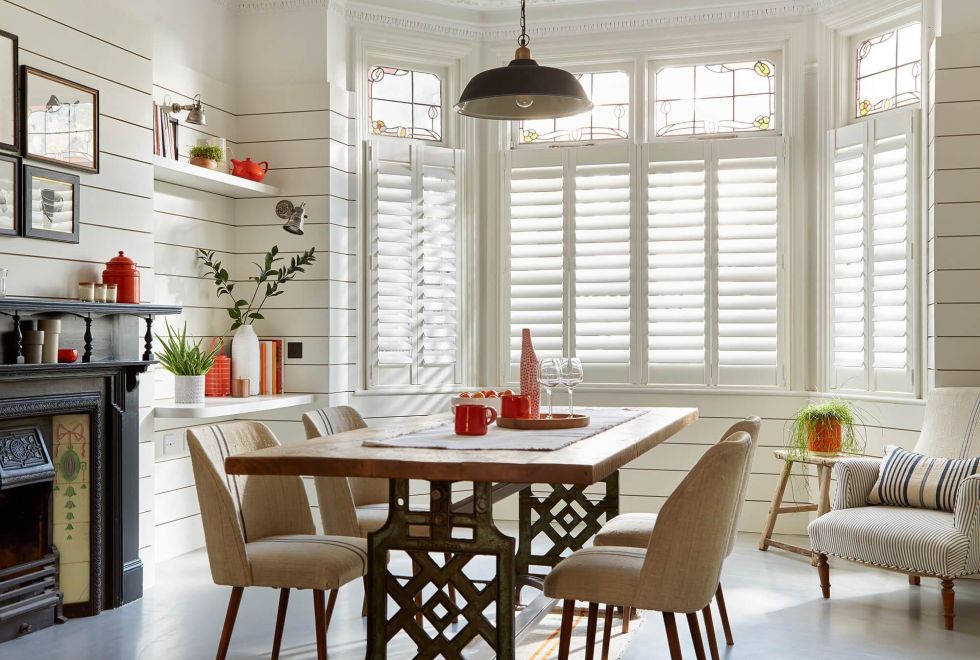
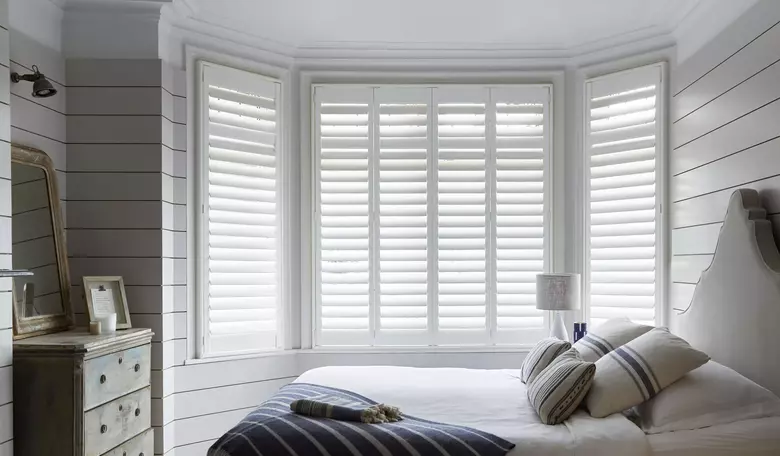
Our Experience with Shutters in Real Homes
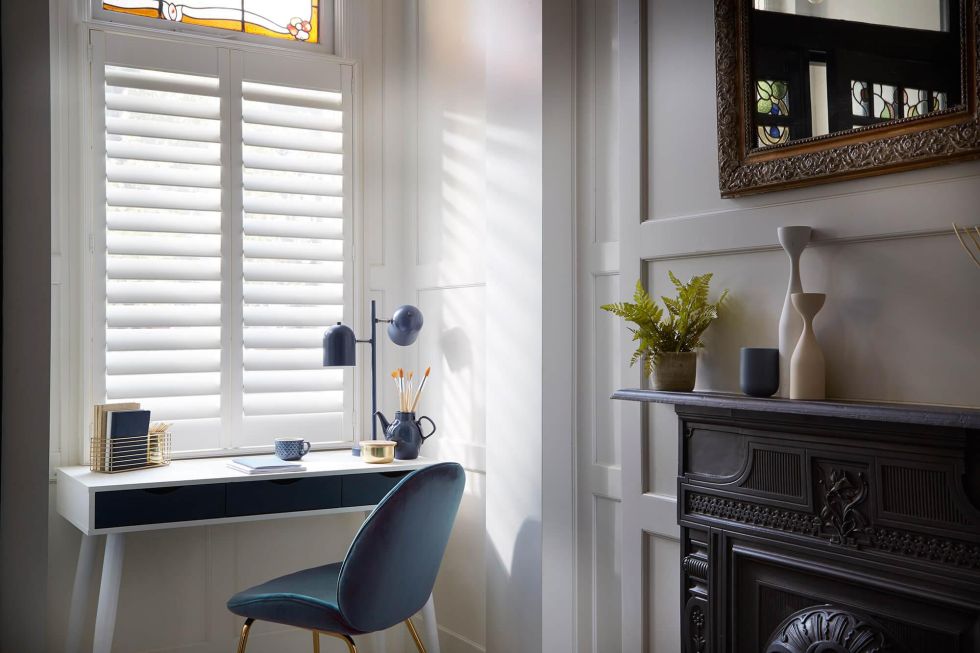
Over the years, we’ve seen how shutters can change the feel of a room entirely. They bring a sense of structure and permanence that’s hard to replicate with other window coverings. In homes with large or awkwardly shaped windows, they also offer a made-to-measure solution that looks intentional and refined.
Clients often tell us that shutters were a considered purchase rather than an impulse decision - and that’s reflected in how well they perform over time. When chosen carefully, they rarely feel like a compromise.
FAQs About Blinds for Bi-Fold Doors
What type of blind is best for bi-fold doors?
Frame-fitted, roller, pleated and cellular blinds can all work well with bi-fold doors. The best choice depends on the door construction, available clearance and whether you want each panel controlled separately. Where the doors are opened frequently, blinds that remain closely attached to compatible individual frames can be especially convenient.
Can you put blinds directly onto bi-fold doors?
Yes, certain blind systems are designed to fit directly or very closely to compatible glazed door frames. However, not every bi-fold door is suitable for every system. Handles, glazing beads, frame dimensions and the space between folded panels should be checked before installation.
Do you have to open the blinds before folding bi-fold doors?
It depends on how the blinds are fitted. A blind mounted above the whole opening will generally need to be sufficiently raised before the doors are folded, whereas compatible blinds fitted individually to each panel can move with the doors. Correct installation is important to prevent the blind from interfering with hinges or neighbouring panels.
What blinds are best for keeping a room with bi-fold doors cooler?
Solar-control roller fabrics and cellular blinds are useful options where heat from direct sunlight is a concern. The best performance depends on the fabric, colour, fit, glazing and direction the doors face. External shading can provide further solar control where a property requires a more comprehensive solution.
Can bi-fold door blinds provide blackout?
Blackout fabrics can considerably reduce incoming light, but fabric labelled as blackout doesn't necessarily make the entire room completely dark. Light can still enter around the edges depending on the fitting method. Bedrooms and media rooms may therefore require a system designed to minimise these gaps as well as an appropriate fabric.
Can bi-fold door blinds be motorised?
Yes, many suitable blind systems can be motorised. This can be particularly useful across wide openings containing several blinds because it makes everyday adjustment easier. The available controls and automation features depend on the system selected.
Are blinds better than curtains for bi-fold doors?
Neither is universally better. Blinds generally take up less room and can offer more precise control across individual glazed panels, while curtains introduce fabric, softness and an additional layer at the doorway. In some rooms, combining suitable blinds with curtains provides the desired balance of practical control and interior style.


